Agra

2026

Agra to Get New Tourist Spots, Memorial for Vajpayee, Temples Makeover Under Rs 118 Crore Plan

In a major step to boost tourism and improve religious places across Uttar Pradesh, the state government led by Chief Minister Yogi Adityanath has approved a large budget. A total of Rs 118.28 crore has been allocated for the development of important monuments, temples, and tourist places. A big focus has been placed on Agra, a famous city with a rich cultural and historical background. Atal Smarak in Bateshwar to Honour Vajpayee Out of the total budget, Rs 22.76 crore has been set aside to build the Atal Smarak in Bateshwar. This special memorial will be built in memory of former Prime Minister Atal Bihari Vajpayee, who was also a Bharat Ratna awardee. The memorial will include a statue of Vajpayee and celebrate his legacy. This project will be developed by the UP Tourism Department, and the UP Project Corporation will carry out the work. Better Facilities at Tourist and Religious Spots A large amount of Rs 71.50 crore will be used to improve the facilities at many tourist and religious places across the state. The aim is to make these sites more comfortable and easier to visit. New signage boards will be installed at important places, with Rs 2.05 crore allotted for this purpose. Holipura village in Bah will also get Rs 12.48 lakh for signage improvements. Tourism Minister Jaiveer Singh said that Agra is already a top destination for foreign tourists because of its three UNESCO World Heritage Sites. He explained, “Development work is being done at tourist and religious places for the convenience of tourists.” The project is funded through the Tourism Development and Infrastructure Fund. Temples in Agra to Get Upgrades Many well-known temples in Agra are also included in this development plan. Dhakam Mata Temple in Khedi will get Rs 88.30 lakh for upgrades. Kailash Temple in Sikandra will receive Rs 15.26 crore for improvement works. Other temples like Dariyanath Temple in Rajamandi, Balkeshwar Mahadev Temple, Dashrath Kunj Temple in Shaheed Park, Shiv Mandir in Fatehabad, and Hanuman Mandir in the Collectorate area will also be improved using this budget. Minister Jaiveer Singh made it clear that strict action will be taken if poor-quality work is done. He said, “Negligence in the quality and standards of work will be unforgivable.” With this big investment, the government hopes to protect the heritage of these important places while making them more attractive to both Indian and foreign visitors. The plan not only supports religious tourism but also improves the experience for travelers looking to explore the history and culture of Uttar Pradesh.

Agra to Get New Tourist Spots, Memorial for Vajpayee, Temples Makeover Under Rs 118 Crore Plan Read More »

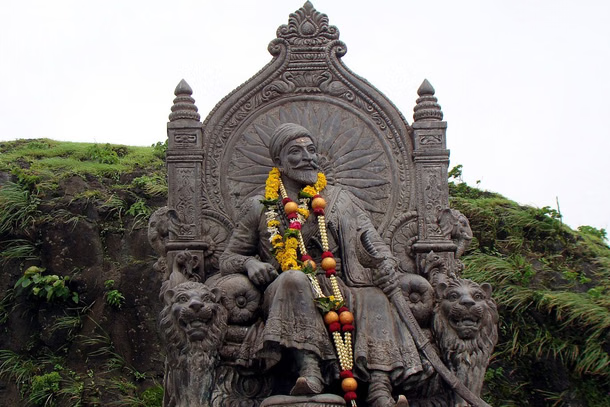
Maharashtra Government To Build Grand Memorial Of Chhatrapati Shivaji Maharaj In Agra

In a momentous tribute to Chhatrapati Shivaji Maharaj, Maharashtra Chief Minister Devendra Fadnavis announced that the state government will build a grand memorial in Agra, where the legendary warrior was kept prisoner, ANI reported. Addressing a gathering in Agra on the 395th birth anniversary of Chhatrapati Shivaji Maharaj, Fadnavis expressed his commitment to securing land in Meena Bazaar, formerly known as Agra Kothi, to set up the memorial. “A grand monument will be erected in Agra Kothi (which is known as Meena Bazaar today), where Chhatrapati Shivaji Maharaj was kept prisoner. The Maharashtra government will acquire the land. There will be a magnificent monument of Chhatrapati Shivaji Maharaj. I will speak to Uttar Pradesh Chief Minister Yogi Adityanath myself…,” Fadnavis was quoted as saying by ANI. Earlier, CM Fadnavis, alongside Deputy Chief Ministers Eknath Shinde and Ajit Pawar, attended the grand birth anniversary celebrations at Shivneri Fort in Junnar, Maharashtra, the birthplace of the Maratha icon. He pledged to restore all forts associated with Chhatrapati Shivaji Maharaj and to remove any encroachments there. “We will develop all his forts. We are constituting a task force to remove the encroachment from all the forts,” Fadnavis announced. Born on 19 February 1630 at Shivneri Fort, Chhatrapati Shivaji Maharaj is considered one of India’s most revered warrior kings.

Maharashtra Government To Build Grand Memorial Of Chhatrapati Shivaji Maharaj In Agra Read More »

Taj Mahal Most-Visited Ticketed Monument In 2024-25, Drawing 6.9 Million Tourists

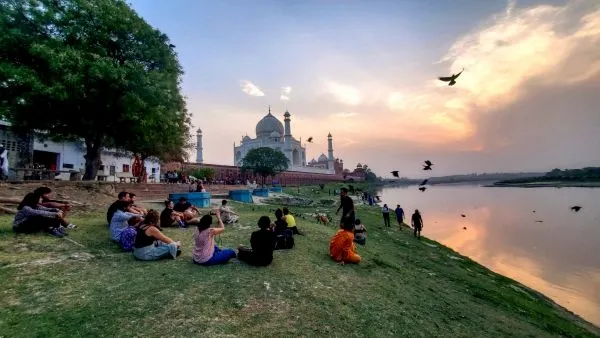
The grand mausoleum of white marble was built between 1631 and 1648 by the order of Mughal emperor Shah Jahan in memory of his wife Mumtaz Mahal. Taj Mahal leads in visitor numbers for both domestic and foreign tourists Mughal-era mausoleum Taj Mahal in Agra was the most-visited centrally protected ticketed monument for both domestic and foreign tourists in the financial year 2024-25, according to data published in a compendium released by the government on Saturday. The compendium was released by the Ministry of Tourism at an event held here to mark World Tourism Day on September 27. The Foreign Tourist Arrivals (FTAs) figures for India reached 9.95 million in 2024, reflecting a 4.52 per cent rise from 2023, it says. Among the centrally protected ticketed monuments, “Taj Mahal leads in visitor numbers for both domestic (6.26 million) and foreign (0.645 million) tourists in FY 2024-25”. The grand mausoleum of white marble was built between 1631 and 1648 by the order of Mughal emperor Shah Jahan in memory of his wife Mumtaz Mahal. It comes under the protection of the Archaeological Survey of India (ASI) and is also a UNESCO World Heritage Site. Other popular sites for domestic visitors include the Sun Temple, Konark in Odisha (3.57 million) and Qutub Minar in Delhi (3.20 million). Foreign visitors favoured Agra Fort (0.22 million) and Qutub Minar (0.22 million) following Taj Mahal, it said. And, arrivals of Non-Resident Indians (NRIs) in India reached 10.62 million in 2024, reflecting a 13.22 per cent increase over 2023 and a substantial 52.15 per cent rise compared to the pre-pandemic level of 2019. “This strong rebound highlights the growing confidence of the Indian diaspora in travelling to India post-pandemic,” the compendium says. International Tourist Arrivals (ITAs) in India thus reached 20.57 million, reflecting an increase of 8.89 per cent over the previous year and 14.82 per cent compared to 2019, according to the 260-page India Tourism Data Compendium 2025. At the event, Suman Bery, vice chairperson of the NITI Aayog, was the chief guest. Union Minister of State for Tourism Suresh Gopi presided over the event, while Suman Billa, additional secretary in the ministry, and other officials also attended it. Bery, in his address, said, “Tourism is not just about leisure; it is a powerful instrument for economic transformation, environmental stewardship, and social inclusion”. Globally, it has been shown by various countries that sustainable tourism can preserve biodiversity while generating livelihoods. India has the same potential, but “we must embed sustainability at the core of our strategy, not at the margins,” he said. “As we look ahead to Viksit Bharat 2047, our vision must be of a tourism sector that is green, inclusive, and future-ready where communities are not just participants but beneficiaries, and where India’s cultural and natural wealth is showcased to the world with pride,” Bery said. The tourism sector was hit globally during the COVID-19 period, and according to the latest compendium, the year 2020 marked a significant downturn due to the pandemic, with FTAs declining by 74.93 per cent to 2.74 million. A gradual recovery was observed in subsequent years, with FTAs rebounding sharply to 6.44 million in 2022 (a 323.68 per cent increase) and reaching 9.95 million in 2024, reflecting a 4.52 per cent rise from 2023, it said. Also, age-wise FTAs in 2024 indicate broad appeal across age groups, with the highest shares from the 35-44 years (20.67 per cent) and 45-54 (20.24 per cent) segments. Significant contributions from the 55-64 and above 65 age groups suggest a growing interest among senior travellers, likely drawn by India’s wellness, heritage, and spiritual tourism offerings, it added. “While the 0-14 age group saw a slight decline compared to 2022 and 2023, it remains significant, highlighting strong family tourism,” the compendium says. The gender-wise FTAs in 2024 show that “57.7 per cent males and 42.3 per cent females, reflecting a balanced gender distribution among foreign visitors,” it added. The compendium further said that in 2024, outbound travel from India continued its upward trajectory, recording 30.89 million departures, a growth of 10.79 per cent over the previous year. This sustained recovery underscores the resilience of India’s outbound travel market, supported by rising consumer confidence, expanding aviation networks, and growing demand for international leisure and business travel, it said. In 2024, the United Arab Emirates remained the leading destination for Indian nationals, followed by Saudi Arabia, the US, Thailand, Singapore, the UK, Qatar, Canada, Kuwait, and Oman. Together, these top 10 countries accounted for approximately 71.16 per cent of all Indian Nationals’ Departures (INDs) during the year. Air travel continues to be the predominant mode of international travel for Indian residents, with 98 per cent of Indian nationals departing by air in 2024. In comparison, 1.46 per cent travelled via land routes, and 0.54 per cent used waterways, the compendium said. In 2023-24, the travel and tourism sector in India generated approximately 84.63 million jobs (including both direct and indirect employment). During the same period, the sector’s total contribution to India’s GDP stood at 5.22 per cent, reflecting its significant role in the national economy, it said.

Taj Mahal Most-Visited Ticketed Monument In 2024-25, Drawing 6.9 Million Tourists Read More »

CEC backs Agra industrial cluster with conditions, clears limited tree felling

By Sudeep Lavania / Updated: Nov 16, 2025, 11:44 IST Agra: The Integrated Manufacturing Cluster (IMC) planned on 1,058 acres along Agra’s Inner Ring Road has received conditional approval, opening the door to a major industrial expansion expected to generate thousands of jobs across sectors. The Supreme Court–appointed Central Empowered Committee (CEC) allowed the felling of 553 trees and the translocation of 997 while imposing stringent environmental safeguards. The Uttar Pradesh State Industrial Development Authority (UPSIDA) had sought approval for the project last year, proposing the removal of 5,084 trees. In its recent submission, the authority revised the estimate to 4,087 trees, a substantial reduction from the original figure. The SC, after reviewing the updated proposal, sought the CEC’s opinion on the project which is expected to position Agra as a modern, investment-ready industrial hub with integrated infrastructure and planned land use. In its 95-page report, the CEC recommended compensatory afforestation, directing authorities to plant 15,500 trees to offset the 1,550 affected. In addition, only industrial units with low pollution emissions as per Central Pollution Control Board (CPCB) standards will be permitted to operate in the cluster. Taj Trapezium Zone (TTZ) chairman Shailendra Kumar Singh, who is also Agra’s divisional commissioner, has been designated as the nodal authority to ensure compliance with the conditions. The IMC is part of the Amritsar–Kolkata Industrial Corridor, nearly half of which runs through Uttar Pradesh. The project, to be implemented by the National Industrial Corridor Development Corporation (NICDC) and UPSIDA, will focus on non-polluting industries. The state government expects the cluster to attract investments worth around ₹3,400 crore. The Supreme Court will now consider the CEC’s recommendations. “The CEC has submitted its recommendations, and the matter is now before the apex court. The SC will need to carefully examine the conditions laid out by the committee as the TTZ is an eco-sensitive zone and its green cover functions as the lungs of the region,” said Sharad Gupta, an Agra-based environmentalist. Note: The Taj Trapezium Zone is an ecologically sensitive area of about 10,400 sq km around the Taj Mahal and adjoining regions, where tree felling and industrial activity are regulated to protect the environment and heritage structures

CEC backs Agra industrial cluster with conditions, clears limited tree felling Read More »

AGRA Urges Farmer-First Climate Action at COP30, Elevating Youth Voices, Soil Health

AGRA has called for a bold shift from rhetoric to action at COP30, urging global leaders to deliver a farmer-first climate breakthrough that places soils, youth, and food systems at the center of international climate commitments. Speaking in Belém, AGRA leaders pressed governments and development partners to convert climate pledges into practical financing and policy packages that strengthen smallholder resilience, create employment for young people, and stimulate growth across Africa’s food economies. “Africa’s farmers are not waiting for the future; they are shaping it,” said Alice Ruhweza, President of AGRA. “A farmer-first climate breakthrough means turning promises into progress, converting finance into resilience, and transforming ambition into action where it matters most—on farms.” AGRA emphasized that COP30 provides a critical platform to advance the global adaptation and resilience agenda through agriculture and food systems. Throughout its engagements in Brazil, AGRA will highlight proven pathways for scaling impact, including coherent agricultural policies, tailored finance mechanisms, strong market systems, and investments in soil health—all with youth and women at the center of agricultural transformation. The organization’s call aligns with the newly adopted Belém Declaration on Hunger, Poverty, and Human-Centered Climate Action, endorsed by 43 countries and the European Union. The declaration underscores that climate action and social justice are inseparable, urging a rebalancing of climate finance toward those most vulnerable to climate shocks. It also highlights the need for climate-responsive social protection, insurance for smallholder farmers, and long-term livelihood programs. AGRA welcomed the declaration, stressing that small-scale producers must be recognized not only as victims of the climate crisis, but also as agents of resilience and transformation. “Resilience is built when the right policies, finance, and technical solutions meet at the farm level,” noted Tilahun Amede, AGRA’s Director for Sustainable Farming, Climate Adaptation and Resilience. “At COP30, together with partners, we aim to show how soil health, water management, inclusive finance and strong value chains can turn climate ambition into practical results for farmers—both for short-term gains and long-term resilience.” The 2025 UNEP Adaptation Gap Report warns that developing countries face an annual adaptation financing shortfall of USD 284–339 billion, with current funding meeting barely 10 percent of that need. AGRA is therefore urging a stronger push to channel climate finance directly to farmers and rural enterprises that form the backbone of Africa’s food and job systems. The farmer-first approach echoes the demands of African climate negotiators, who are advocating for adaptation interventions that deliver real improvements for producers. With governments, AGRA is working to streamline regulations for climate-resilient seed varieties, strengthen risk-sharing instruments to attract private capital, and align donor investments with national priorities rather than short-term pilot projects.

AGRA Urges Farmer-First Climate Action at COP30, Elevating Youth Voices, Soil Health Read More »

Daily Court Digest: Major environment orders (May 26, 2025)

Untreated sewage and industrial effluents discharged into Ganga river, Varanasi An action plan to prevent the discharge of untreated sewage and industrial effluents into the river Ganga has been prepared, but approval from the chief secretary or additional chief secretary for Uttar Pradesh’s Environment, Forest and Climate Change department is still awaited, the counsel representing the state informed the National Green Tribunal (NGT) on May 23, 2025. The counsel accordingly sought time to file the approved plan. A letter to this effect has also been circulated. The Tribunal accepted the request and listed the matter for hearing on August 29, 2025. The applicant, Rajendra Prasad Gupta, had submitted a letter petition raising concerns about the discharge of domestic and industrial wastewater into the Ganga at Varanasi. Supporting the petition, he enclosed photographs showing wastewater discharge and encroachments along the river’s embankments at various locations. Illegal felling of trees in Agra The NGT directed the authorities concerned to file their responses regarding complaints of large-scale illegal felling of green trees in Agra district, Uttar Pradesh on May 23, 2025. The respondents were instructed to file their replies at least one week prior to the next hearing date, which is August 29, 2025. Respondents include the Zila Panchayat Agra, Uttar Pradesh Pollution Control Board, Union Ministry of Environment, Forest and Climate Change (MoEFCC), district magistrate Agra, district forest officer Agra, and the Taj Trapezium Zone Authority, among others. The application cited instances of illegal tree felling in the tehsils of Fatehabad, Sadar, Kiraoli and Agra. Newspaper articles submitted as evidence highlighted unauthorised tree felling in Kiraoli tehsil for the construction of a residential colony. The applicant’s counsel referred to a Supreme Court order from May 2025, which stated that any tree felling within a 5 kilometre aerial radius of the Taj Mahal requires the Court’s permission, which was not sought in this case. Illegal mining and use of ammonium nitrate in Leta village, Mahoba The NGT directed that notices be issued to authorities and a mineral-based company allegedly involved in illegal mining in Leta village, Mahoba district, Uttar Pradesh on May 23, 2025 . The tribunal stated that the matter involved substantial issues concerning compliance with environmental regulations. Notices were ordered to be served on the controller of explosives, Uttar Pradesh Pollution Control Board, Jai Maa Chandrika Enterprises and the district collector of Mahoba. The next hearing has been scheduled for September 1, 2025. In addition to the illegal mining complaint, the applicant, Akhilesh Kumar, raised concerns about the unauthorised sale and use of ammonium nitrate by the miner. The applicant submitted that gatta (land parcel) number 576 in Leta village, tehsil Kulpahar, Mahoba district, was leased to the miner for a 10-year period starting from May 24, 2001, which has since expired. Despite this, Jai Maa Chandrika Enterprises has sought a licence for a shed to manufacture ammonium nitrate fuel oil. The applicant also referred to information obtained through the Right to Information (RTI) Act on March 30, 2024, confirming that araji (property) number 576, covering 4.5 acres, had been sanctioned for a 10-year term from May 24, 2001. Another RTI reply dated April 25, 2024, provided by the directorate general of mines safety, revealed that no formal notice regarding the opening of the mine at gatta number 576 had been submitted to the directorate.

Daily Court Digest: Major environment orders (May 26, 2025) Read More »

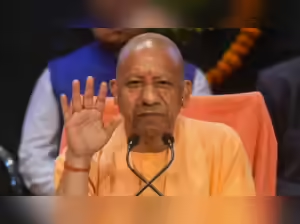
Agra identifies with Chhatrapati Shivaji Maharaj’s legacy, not the Mughals, says Yogi Adityanath

ET Online — Mar 27, 2025, 05:26 PM ISTUttar Pradesh Chief Minister Yogi Adityanath said that the people of Agra identify more with the legacy of Chhatrapati Shivaji Maharaj than with the Mughal era during a public event in the city, according to a report by The Economic Times. Addressing a gathering to mark the eighth anniversary of the BJP-led Uttar Pradesh government, Yogi said that Agra’s cultural roots are firmly grounded in Indian tradition, including Brajbhoomi, Vrindavan Bihari Lal, and Radha Rani, rather than its association with Mughal rule. He stated that if the city’s identity were to be linked to any historical figure, it should be Shivaji Maharaj, the 17th-century Maratha warrior king. The Chief Minister also highlighted a decision by his government to rename a proposed Mughal museum project in Agra, shifting focus instead toward recognizing Shivaji Maharaj’s legacy. Plans for a memorial dedicated to Shivaji Maharaj in Agra were also announced as part of this shift in emphasis. In addition to cultural remarks, Yogi inaugurated 128 development projects worth ₹635 crore aimed at boosting Agra’s infrastructure, economy, and welfare initiatives. He noted improvements in the city’s industries—such as support for petha and leather sectors—as well as broader progress in infrastructure, safety, and public services under his administration. The projects include plans for Metro Rail completion in Agra, enhanced water supply through the Ganga project, expansion of civil aviation facilities, and increased household amenities like tap water connections. Welfare schemes like PM-Kisan Samman Nidhi and housing programs were also highlighted. Yogi asserted that infrastructure and welfare improvements since 2017 demonstrate a positive transformation in public services and quality of life for citizens across Uttar Pradesh.

Agra identifies with Chhatrapati Shivaji Maharaj’s legacy, not the Mughals, says Yogi Adityanath Read More »

Why Karni Sena attacked SP MP Ramji Lal Suman’s house in Agra 

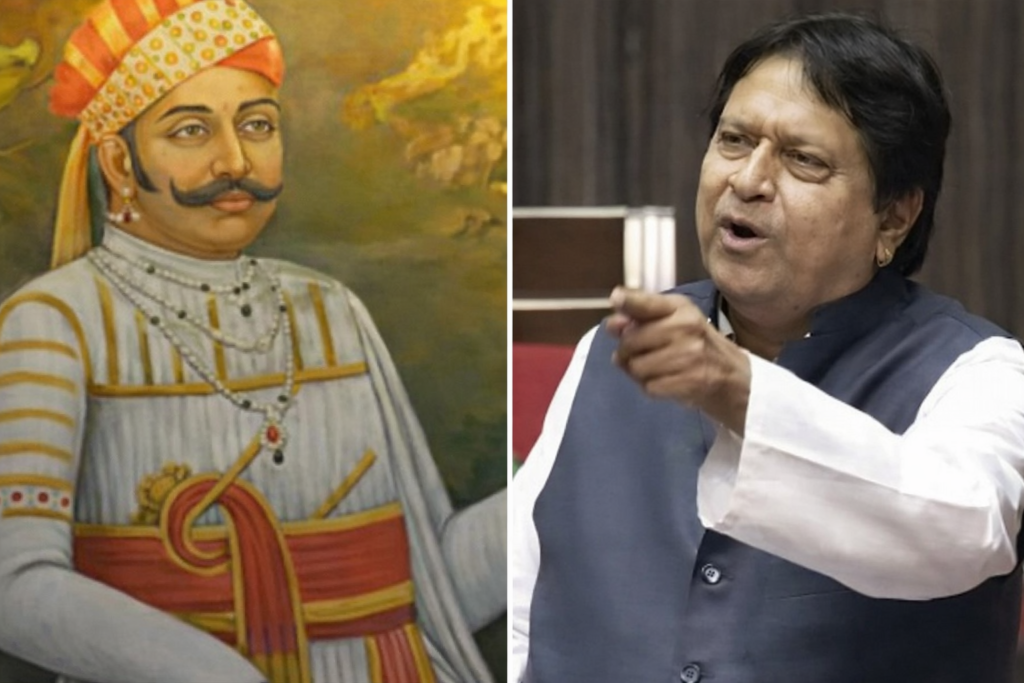
By Biswajeet Banerjee — Published March 27, 2025 / 09:19 IST A major political controversy erupted in Uttar Pradesh after members of the Rajput outfit Karni Sena staged a violent demonstration outside the residence of Samajwadi Party (SP) Rajya Sabha MP Ramji Lal Suman in Agra. The protest — marked by the presence of a bulldozer and a large crowd — was triggered by Suman’s remarks in Parliament about the 16th-century Rajput ruler Rana Sanga. 🔥 What Suman Said That Sparked Backlash Suman had asserted in the Rajya Sabha that Rana Sanga invited Mughal emperor Babur to India to defeat Ibrahim Lodi, a claim that questioned the legacy of the Rajput hero. He also argued that if Indian Muslims are labeled as descendants of Babur, then by the same reasoning, Hindus would have to be considered descendants of “a traitor like Rana Sanga.” These remarks deeply offended Rajput groups, who regard Rana Sanga as a revered warrior and symbol of Rajput pride. 🚩 The Attack and Protests Karni Sena activists, along with supporters of other Rajput organisations, gathered outside Suman’s Agra residence in the Sanjay Place area and vandalised property. They used a bulldozer in the protest, broke through police barricades, chanted slogans, and damaged vehicles and furniture outside the house. Police intervened, and several officers were reportedly injured while trying to control the crowd. An FIR was later registered by the Agra police. The protest was not limited to Agra — Karni Sena and allied Rajput bodies burned effigies of Suman, demanded his resignation, and called for legal action and disciplinary measures against him. 🧠 Historical Debate and Political Fallout The claim that Rana Sanga invited Babur remains historically disputed; some historians note that it was the governor Daulat Khan Lodi who invited Babur to India, not Rana Sanga. Still, Suman’s remarks struck a political nerve, drawing condemnation from the BJP — including Union Minister Gajendra Singh Shekhawat, who said it was wrong to equate a revered warrior with a “traitor” — and sparking internal divisions within the SP, with some leaders distancing themselves from the comments. 🧩 Broader Political Context The Karni Sena has a history of mobilising over perceived assaults on Rajput icons and heritage — from protests against films like Padmaavat to caste-based political demands. Analysts say the incident has put the Samajwadi Party in a difficult position; defending Suman’s historical viewpoint risks alienating Rajput voters, while distancing from him could cause internal party tensions.

Why Karni Sena attacked SP MP Ramji Lal Suman’s house in Agra  Read More »

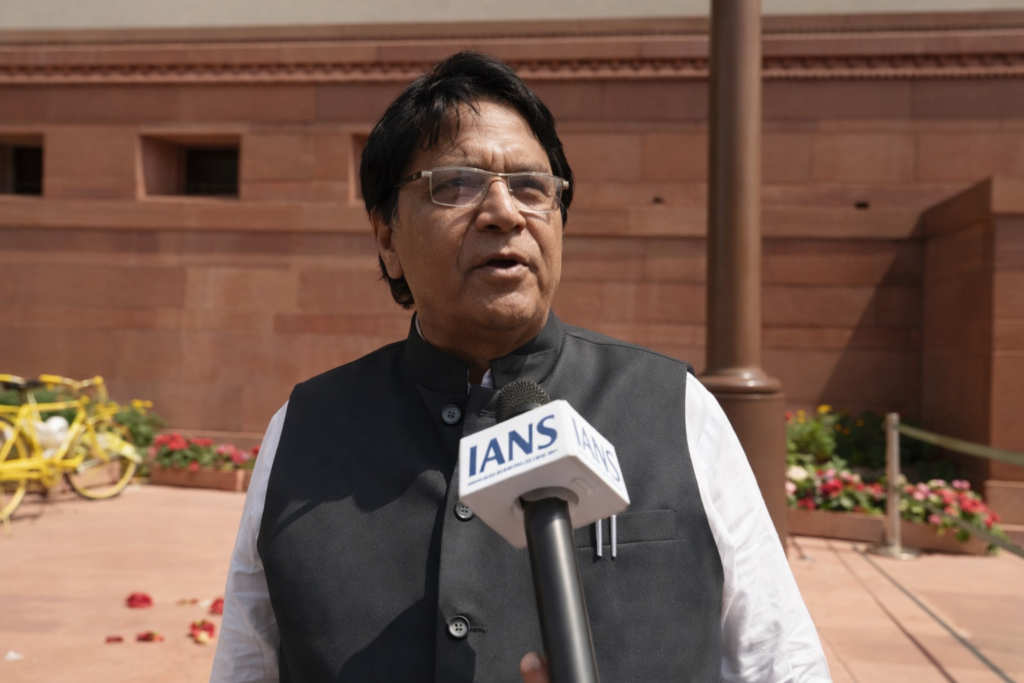
Karni Sena attacks Samajwadi Party MP Ramji Lal Suman’s Agra house but SP, BJP turn ‘caste conscious’

Economic Times / Politics & Nation — Published March 26-27, 2025 Activists from the Karni Sena, a Rajput community-based group, vandalised the residence of Samajwadi Party (SP) Rajya Sabha MP Ramji Lal Suman in Agra, Uttar Pradesh, after the lawmaker made controversial comments about the 16th-century Rajput ruler Rana Sanga during a Parliament session. The attack on his Agra home sparked political tensions, with both the SP and BJP accusing each other of playing caste politics in the aftermath of the incident. 🔥 What Happened The Karni Sena protesters, incensed by Suman’s remarks on Rana Sanga, gathered in Agra and vandalised chairs and cars outside the MP’s residence in the Sanjay Place area. Police intervened, but some officers were injured while trying to stop the mob from entering the property. The MP was not at home when the attack occurred. Reports say the protest was triggered by remarks Suman made in the Rajya Sabha, where he described Rana Sanga — a revered historical figure among Rajputs — in a way that was interpreted as derogatory, leading to widespread backlash from Rajput groups, including the Karni Sena. 📌 Political Reactions 🧨 Broader Context The Rana Sanga controversy inflamed sentiments because Rana Sanga, a historic Rajput ruler, is held in high esteem by many in the Rajput community. The Karni Sena — known for mobilising over perceived slights to Rajput pride — saw Suman’s comments as an insult that warranted protest. The Economic Times The aftermath of the attack saw continued political arguments, with SP leaders alleging laxity by the administration, while BJP members sought to condemn violence and distance the party from extremist action

Karni Sena attacks Samajwadi Party MP Ramji Lal Suman’s Agra house but SP, BJP turn ‘caste conscious’ Read More »

Deepti Sharma receives grand welcome in Agra after Women’s World Cup win

Agra erupted in joy as Indian cricket star Deepti Sharma — a key player in India’s ICC Women’s World Cup 2025 triumph — returned to her hometown to a massive celebration. Thousands of fans lined the streets of Agra to cheer the 10-kilometre roadshow organized by the District Cricket Association in her honor. Residents, school children, sports enthusiasts, and local dignitaries waved flags, showered flowers, and welcomed Deepti with great enthusiasm. Deepti played a pivotal role in India’s maiden Women’s World Cup victory, helping lead the team to glory and earning the Player of the Tournament accolade for her exceptional all-round performance. Overwhelmed by the reception, Deepti expressed her disbelief and gratitude, saying she still “can’t sink it in” and describing the welcome as a dream come true. She also said she hoped her success would inspire young athletes to aim high and work hard toward their goals. To manage the large crowds during the celebrations, more than 150 police and traffic personnel were deployed across Agra. 🏏 Context: India’s Historic Women’s World Cup Win India clinched their first-ever ICC Women’s World Cup title in 2025, defeating South Africa by 52 runs in the final held at the DY Patil Stadium in Navi Mumbai. Deepti Sharma’s all-round contributions — including a crucial batting performance and impactful bowling — were instrumental in the team’s success.

Deepti Sharma receives grand welcome in Agra after Women’s World Cup win Read More »

Shopping Cart
List
News
Home
Jobs
Contact